
Containment to protect clean areas
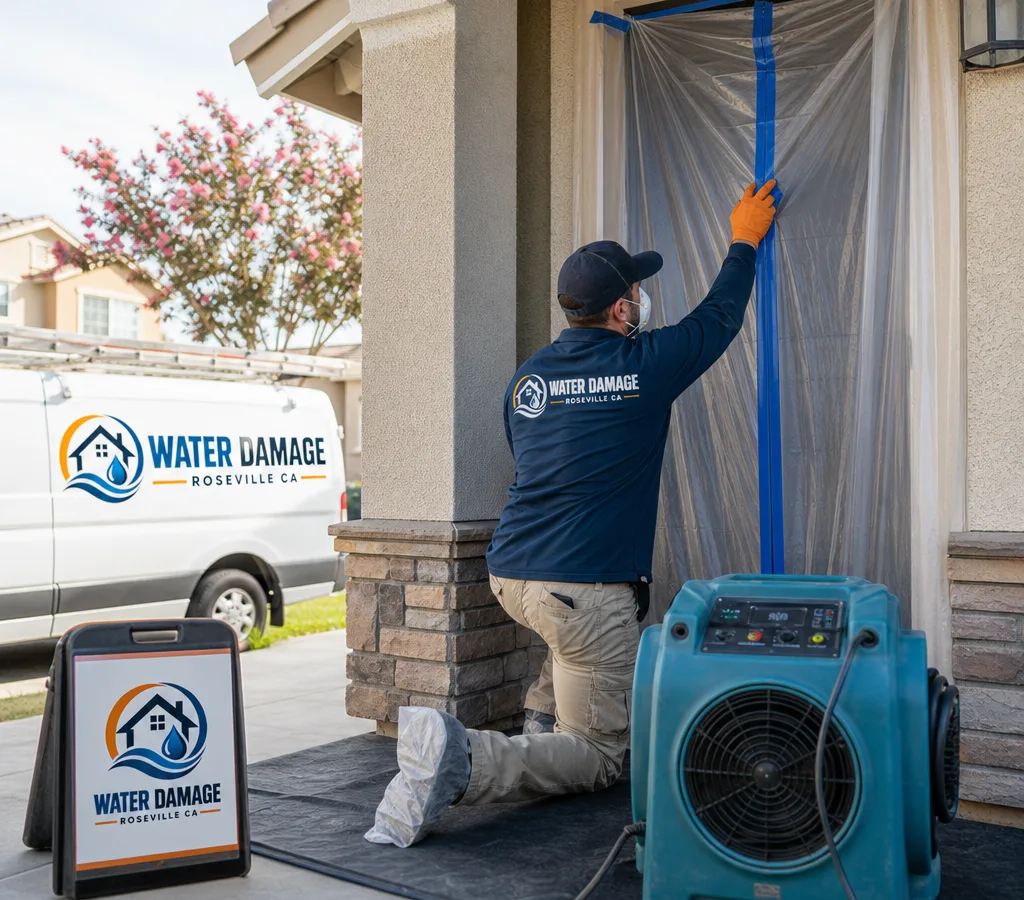
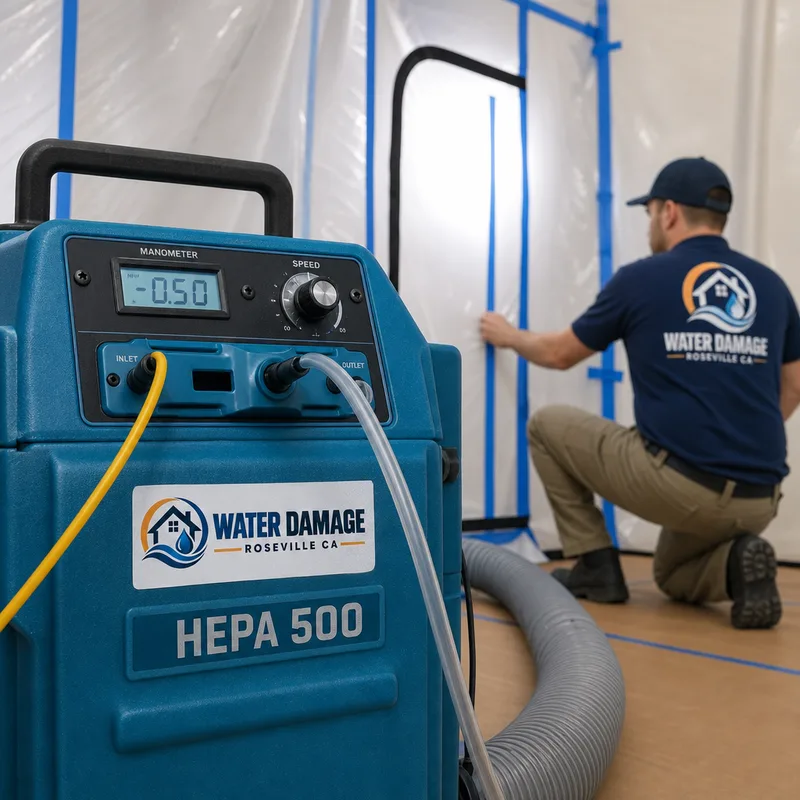
We isolate the work zone with plastic barriers and controlled airflow, so dust and spores stay in the affected space instead of traveling through halls, bedrooms, or office suites.
Serving Roseville, California & surrounding areas
24/7 Emergency Response
If you smell a musty odor, see staining, or have had a leak, we can inspect, contain the area, remove contamination safely, and leave you with a clear moisture-control plan for the next steps.
Searching for mold removal Roseville CA usually means something already changed inside the building: a past plumbing leak under a sink, a roof drip that went unnoticed, a bathroom fan that is not moving enough air, or moisture that stayed trapped behind drywall.
Mold removal is not a quick wipe-down. Effective work starts with finding where moisture is coming from, keeping spores from spreading to clean areas, and removing or cleaning materials the right way for the surface involved. If the source stays active, mold returns.
Water Damage Roseville CA handles mold situations for homes and businesses in Roseville (ZIP 95678). We focus on clear documentation, practical options, and careful containment so you can make decisions with confidence.
We isolate the work zone with plastic barriers and controlled airflow, so dust and spores stay in the affected space instead of traveling through halls, bedrooms, or office suites.
HEPA air scrubbers and HEPA vacuums capture fine particles during removal and cleanup. We finish with surface cleaning appropriate to the material and level of contamination.
Drywall, insulation, carpet pad, and some ceiling tiles often need removal when contaminated. Structural framing can often be cleaned, treated, and dried when conditions allow.
We use moisture readings to guide drying and to confirm when materials are back in a safe range. You get a plan to address the source so the problem does not repeat.
You will know what areas are affected, what will be removed, what can be cleaned, and what repairs are typically needed after remediation.
Mold growth is often visible in one spot while the larger issue sits behind it. Common examples we see include:
Our approach is designed to stop spread during removal. We set containment, run HEPA filtration, remove or clean affected materials, and dry what can be saved. Just as important, we help you identify the moisture driver—leak, condensation, drainage, or ventilation—so your repair plan actually solves the problem.
If the mold situation started after a leak or flooding event, drying and remediation steps often overlap in the first 24 to 72 hours.
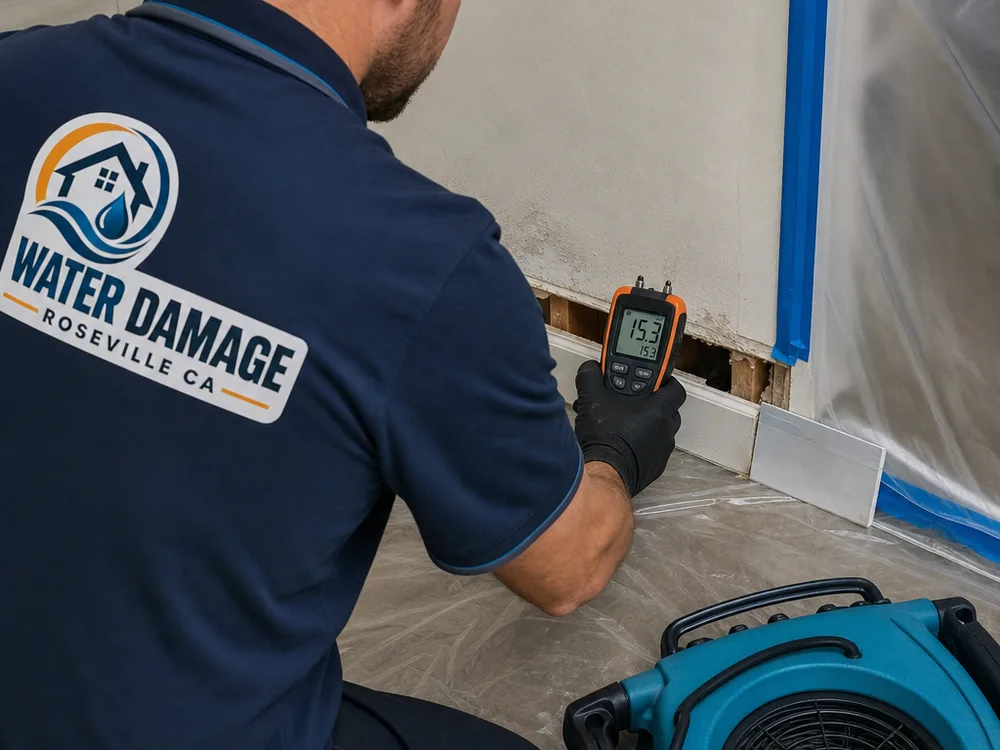
We look for visible growth, staining, odors, and likely moisture pathways, then use moisture readings to map what is wet versus what only looks affected.
We isolate the area and set HEPA filtration. This reduces cross-contamination while we open affected cavities or remove damaged finishes.
We remove porous materials that cannot be reliably cleaned, clean remaining surfaces with appropriate methods, and dry framing or subfloors when salvageable.
We perform a final HEPA vacuum and wipe-down as needed, then re-check moisture so you have a practical indicator that the area is ready for repairs.
We outline what should be rebuilt and what needs to change to keep moisture under control, such as ventilation improvements, plumbing repair, or sealing and insulation adjustments.
Mold removal in Roseville typically ranges from about $900 to $3,500 for smaller, contained areas, while larger or multi-room projects with significant demolition and drying often run $4,000 to $10,000+.
Your final price depends on the size of the affected area, how many materials must be removed—drywall, insulation, or flooring—how hard the space is to access, and whether drying equipment needs to run for multiple days. The exact cost is confirmed after an on-site inspection and a written scope.
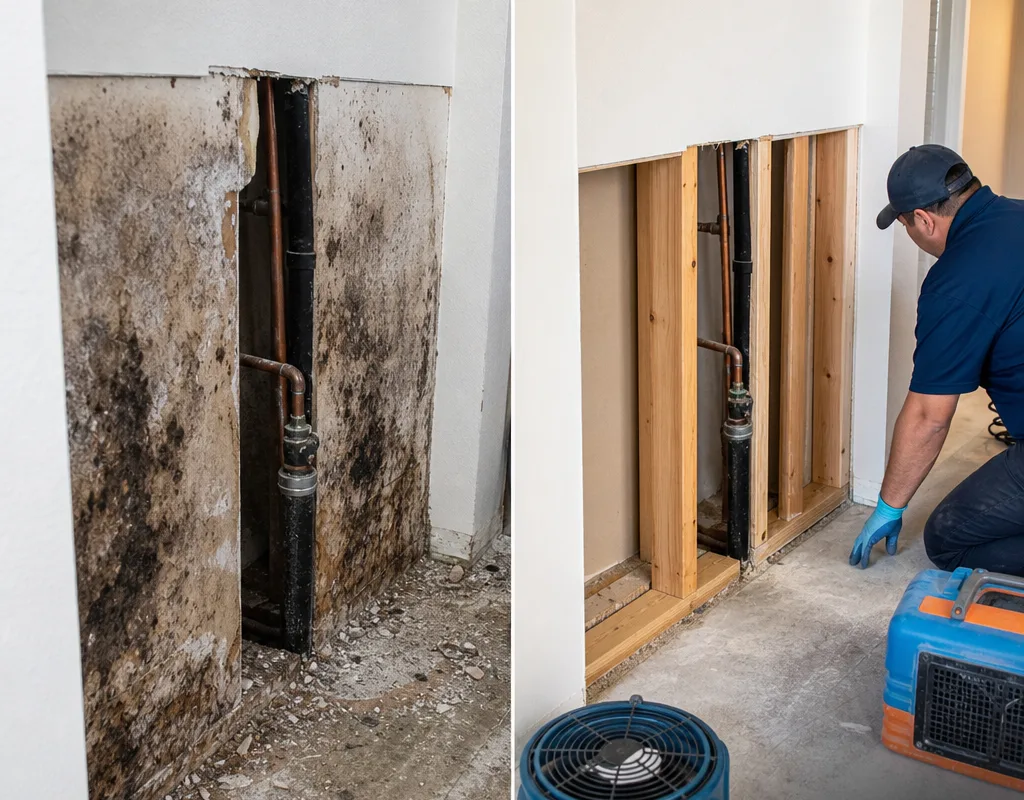
“We found mold behind the vanity after a slow leak. The team contained the bathroom, removed the damaged drywall, and explained what needed to be fixed so it wouldn't come back. The scope was clear and the work area was kept clean.”
“They didn't just scrub the visible spots. They checked moisture, opened the wall where it was wet, and walked us through what could be saved and what had to be replaced. That level of explanation helped a lot.”
Most mold situations can start quickly once we confirm the scope, because the first priority is containment and moisture control. If there is active moisture—a continuing leak, wet drywall, or damp subfloor—starting sooner reduces how far damage can spread and how much material needs removal.
If drywall or insulation is contaminated, removal is often the correct choice because porous materials are hard to clean reliably once mold grows into them. When mold is only on non-porous surfaces, cleaning and drying may be enough, but we base that call on what is actually affected and what is still wet.
It depends on where the mold is and how the area can be contained, but many projects allow normal occupancy outside the contained zone. We set barriers and use HEPA filtration to limit airborne spread; for sensitive occupants or when the affected area is central to daily living, a temporary alternate plan can be smart.
Sampling is not required for every job, because visible growth plus moisture is enough to justify remediation, but it can be used when the situation is unclear or when documentation is needed for decision-making. If sampling is appropriate, we can discuss what questions the test would answer and how results would change the scope.
Mold returns when the moisture source was never solved or when materials were closed up before they were dry. In Roseville homes, common drivers include small plumbing leaks, recurring condensation in bathrooms, and water intrusion around windows or roof penetrations. Our process emphasizes moisture verification before rebuild.
Yes, but those spaces usually require extra access planning and careful containment, especially when insulation and dusty surfaces are involved. We focus on safe entry, controlled cleanup, and a prevention plan that addresses ventilation and moisture migration specific to that space.
Tell us what you are seeing and where it is showing up. We will schedule an inspection, explain the scope in plain language, and outline the steps to remove mold safely and control the moisture that caused it.